Seattle AI Week had no shortage of big ideas about what AI will do for business.
Over the course of the week, offices, coworking spaces and event halls across the city filled with demos, panels and late-night debates about agents, models and what comes next. At Accenture's Seattle office on Second Avenue, the question was more practical: how does AI become measurable value inside an enterprise?
Accenture's The Next Horizon of AI: Creating Value Across the Enterprise drew about 150 founders, operators and decision-makers for an afternoon panel, followed by a happy hour and tech showcase.
It felt like a room past the experimentation phase. 7thGear was there for the showcase, and it was exactly the kind of room we had hoped to be in.
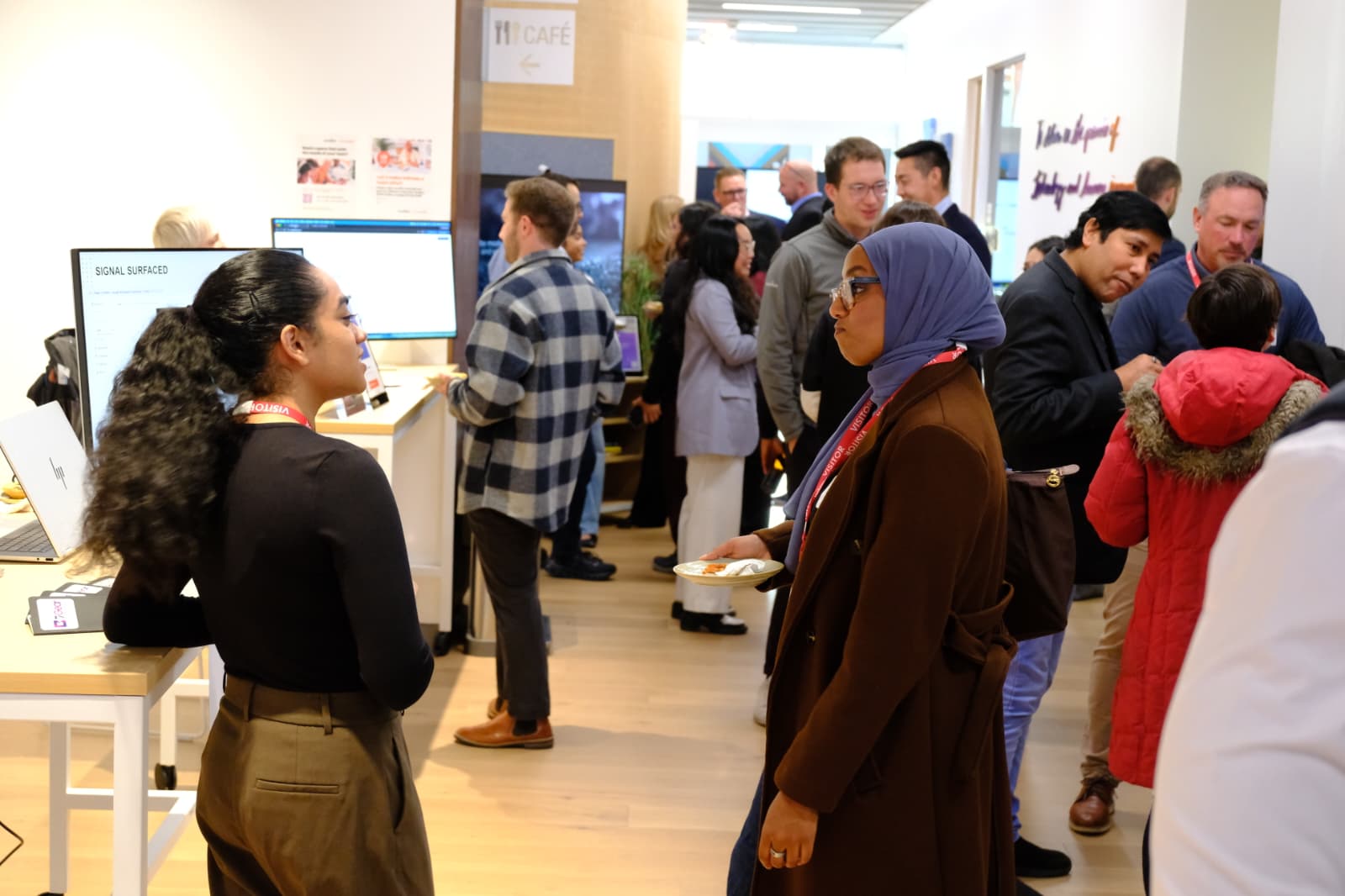
The happy hour and tech showcase filled Accenture's Seattle office during Seattle AI Week.
The afternoon opened with a panel that put Accenture's Richard Starnes alongside leaders from Microsoft, Teladoc Health and Sorenson. Their shared question set the tone for the rest of the evening: what does it take to turn AI capability into results an enterprise can measure?
When the panel wrapped, the room shifted gears. Drinks came out, the conversation moved from the stage to the floor, and the tech showcase turned abstract ideas into something people could see and touch. That same question about real enterprise value followed attendees from table to table, including ours, where it sparked some of the most candid conversations of the night.

One of many conversations at the 7thGear table during the happy hour.
The questions were telling. Nobody asked whether AI could summarize a meeting; that is table stakes now. People asked where the insight goes next. Into Salesforce or HubSpot. Into a weekly digest for leadership. Into an early flag on an account that is drifting months before renewal. In a room focused on enterprise value, the interest was less in the model and more in what it changes on Monday morning.
It is a shift we have felt in our own conversations with customers. A summary is useful, but a summary that sits in a folder changes nothing. The value shows up when intelligence lands in the systems account teams already use, at the moment someone needs to act on it. Account teams do not need more information. They need the right information, in the right place, early enough to do something about it: before the quarterly business review, before the renewal call, before a quiet account goes quiet for good.
The conversation we are still thinking about came from the consulting side of the room, fitting for a night hosted by Accenture. Consultants live and die by client relationships, yet what a firm knows about each client is scattered across call notes and inboxes, and it often leaves when an engagement lead rotates off. We talked through how 7thGear could serve as shared memory for every client, capturing each conversation, surfacing commitments and risks, and letting a new lead get answers grounded in the actual calls. For firms that sell expertise by the hour, that means faster ramp-up, fewer surprises at renewal and a clearer view for leadership of which relationships need attention.
Events like this are part of what makes Seattle's AI scene distinct. The city has deep enterprise roots, and the conversations here tend to favor practical deployment over hype. People want to know how something works, who it works for and what it costs to get wrong. For a company building for enterprise account and customer success teams, that is the right audience, and the right kind of pressure.
That is what we took home from the night. AI's next horizon is not another model. It is the unglamorous work of putting intelligence where decisions get made, and account management, where revenue is won or lost one relationship at a time, is one of the clearest places to start.
Thank you to Accenture for hosting, to the panelists for a grounded conversation, and to everyone who stopped by our table.
Want to see what 7thGear surfaces in your accounts? Book a demo.